 Africa
 6 min read
 November 16, 2026
With rice imports costing African economies billions of dollars each year, West Africa is looking to strengthen its domestic rice industry. A new regional investment initiative is bringing attention to opportunities across farming, processing, agricultural technology, and trade.
Africa's Agricultural Economy
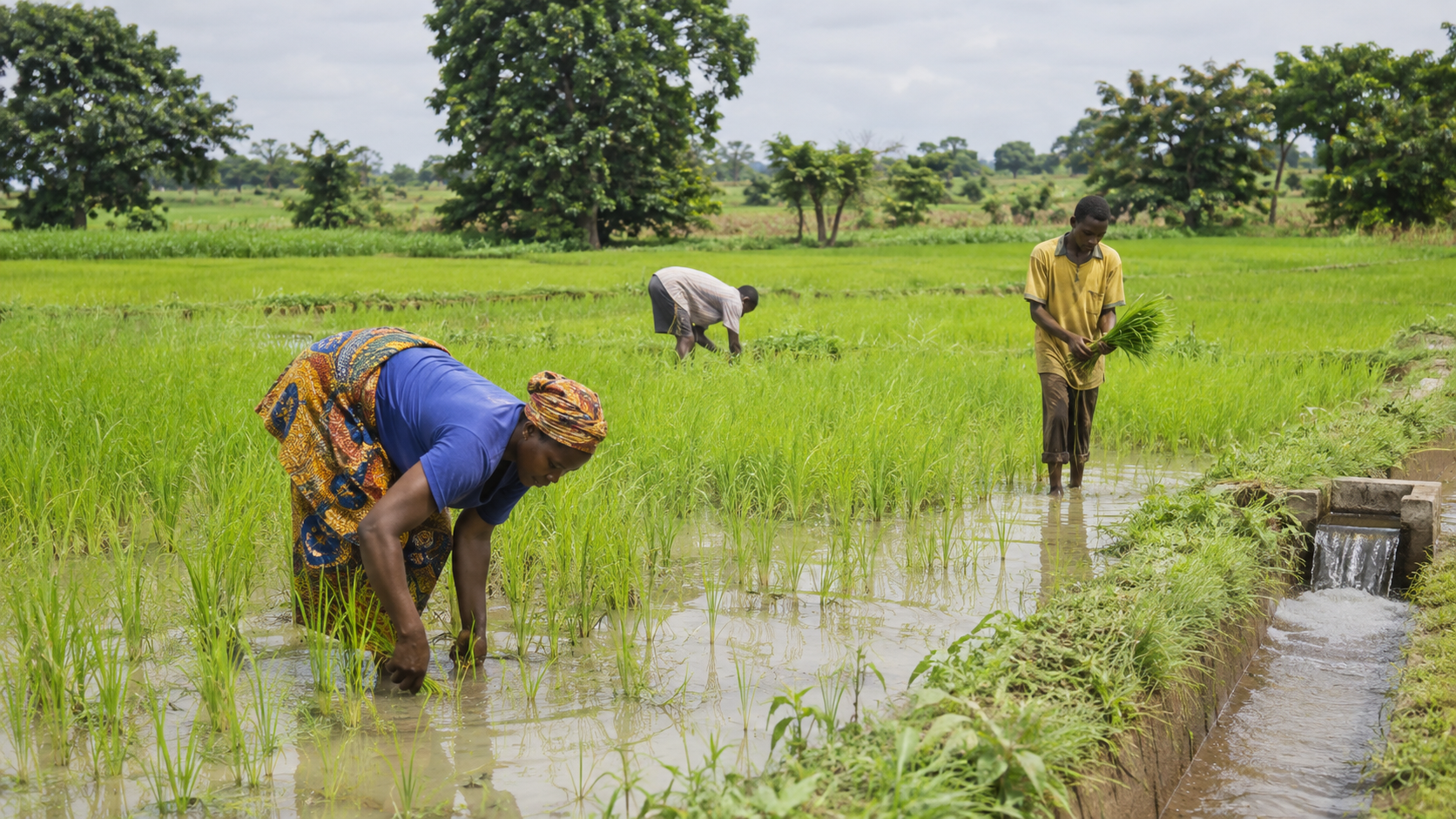
Agriculture remains an important part of Africa's economy, supporting livelihoods, employment, and food supply across the continent. However, the sector continues to face challenges that limit its productivity and commercial potential, including inadequate irrigation, limited mechanisation, low agricultural yields, and insufficient post-harvest infrastructure.
According to the African Development Bank's (AfDB) Annual Development Effectiveness Review 2026, agriculture accounted for approximately 17% of Africa's gross domestic product in 2025. The continent's average cereal yield stood at 1.68 tonnes per hectare in 2024, showing little improvement from the 1.69 tonnes recorded in 2020 (African Development Bank Group, 2026).
These figures point to a sector where investment needs extend beyond increasing the amount of land under cultivation. Improving productivity also requires better seeds, modern equipment, reliable water systems, processing facilities, storage infrastructure, and access to markets.
The economic importance of this wider agricultural system is reflected in the number of people who depend on it. A 2026 study published in World Development estimated that agrifood systems accounted for approximately 64% of employment in Africa in 2021. This includes not only farming but also activities such as food processing, transportation, distribution, and other services connected to agriculture (Davis et al., 2026).
At the same time, food security remains a major concern. The Food and Agriculture Organization of the United Nations (FAO, 2026) estimated that 309 million people in Africa experienced hunger in 2025.
For investors, these conditions reveal a market that needs more than agricultural production. There is room for businesses that can improve the efficiency of the entire food supply chain, from farm inputs and equipment to processing, storage, and distribution.
Rice is one of the commodities where these investment needs are becoming particularly visible.
Why Rice Has Become a Strategic Investment Priority
Rice has become an increasingly important staple across African markets, supported by population growth, urbanisation, and changing consumption patterns. However, domestic production has not kept pace with demand.
According to the International Rice Research Institute (IRRI), Africa imports approximately 18 million tonnes of rice annually and spends an estimated US$6–9 billion on rice imports. Sub-Saharan Africa accounts for roughly one-third of internationally traded rice, making the region particularly exposed to changes in global supply and prices (IRRI, 2026a).
The imbalance is also visible in the difference between production and consumption. The Global Rice Policy Dialogue 2026 reported that rice consumption in Africa is growing at approximately 6% annually, compared with production growth of around 4% (IRRI, 2026b).
This gap creates a substantial market for imported rice. It also raises a commercial question on how African countries can retain more of this market within their own economies by strengthening domestic production and processing.
The opportunity is not necessarily to eliminate imports entirely. Rice trade will remain important, particularly when domestic production is affected by weather, input costs, or seasonal supply limitations. The more immediate challenge is to develop competitive local and regional value chains that can supply consumers consistently.
West Africa is now putting significant attention and investment behind this objective.
West Africa's US$500 Million Rice Investment Initiative
One of the major developments in West Africa’s rice sector emerged during the Africa Food Systems Forum 2026, held in Kigali, Rwanda, in September. Nigeria, Senegal, Côte d’Ivoire, Guinea, Ghana, and Sierra Leone launched the US$500 million West Africa Rice Investment Facility, with the ECOWAS Bank for Investment and Development (EBID) committing an initial US$100 million.
The facility is intended to support the development of the regional rice value chain, addressing investment needs across agricultural production, processing, and supporting infrastructure. Its launch reflects growing efforts to mobilise financing and strengthen the capacity of West African countries to meet rising domestic and regional rice demand (IRRI, 2026a).
The initiative was subsequently discussed in the context of broader African and Asian cooperation at the Global Rice Policy Dialogue 2026, held in Addis Ababa, Ethiopia, on October 15–16. Co-hosted by the African Union Commission and IRRI, with regional and research partners, the two-day dialogue brought together policymakers, researchers, financiers, and private-sector representatives.
Participants discussed strengthening rice markets through investment across the entire value chain. They also called for greater financing, more predictable trade arrangements, regional rice reserves, shared market information, and early-warning systems to help countries respond to supply disruptions (IRRI, 2026b).
The West Africa Rice Investment Facility also follows another significant development in June 2026. At the West Africa Rice Investment Roundtable in Accra, convened by the Economic Community of West African States (ECOWAS), the World Bank Group, and the African Development Bank, participating countries presented investment priorities based on their national rice strategies.
The roundtable recorded 111 investment commitments and expressions of interest, with reported resources exceeding US$1.54 billion. These included 24 public commitments ready for announcement, 32 commitments under discussion, and 55 expressions of interest from development banks, financial institutions, donors, and private-sector investors (ECOWAS, 2026).
The figures demonstrate the scale of interest surrounding the sector. However, they should not be interpreted as US$1.54 billion already invested in operational projects. The different stages of commitment indicate that further project preparation, financing agreements, and implementation will be necessary.
The priorities identified at the roundtable also show where much of the investment is expected to go: irrigation, seed systems, agricultural machinery, milling, storage, transportation, and trade.
For private businesses, this is where the opportunity becomes more concrete.
The Investment in the Rice Value Chain
The development of West Africa's rice industry requires businesses that can address specific gaps in production and distribution. Opportunities are not limited to companies operating farms. Equipment manufacturers, processors, logistics providers, and agricultural service businesses can also participate.
Agricultural production and farm inputs
Rice production requires reliable access to quality seeds, fertilisers, irrigation, and suitable farming equipment. Businesses supplying improved seed varieties, agricultural inputs, irrigation systems, and mechanisation services may find opportunities as countries expand cultivation and improve yields.
There is also potential for companies offering equipment leasing and farm services. Rather than requiring every farmer to purchase expensive machinery, service providers can make equipment available through rental or contract-based arrangements.
Rice milling and processing
Increasing production does not automatically result in a competitive rice industry. Harvested rice must still be dried, milled, cleaned, graded, and packaged before it reaches consumers.
This creates opportunities for investors in rice mills, parboiling facilities, destoners, graders, colour sorters, and packaging equipment. Processing businesses can generate revenue by purchasing paddy rice, providing milling services, or entering supply agreements with farmers and agricultural cooperatives.
Storage and post-harvest infrastructure
Inadequate storage and post-harvest handling can reduce the quantity and quality of rice available for sale. Investment in warehouses, grain silos, drying facilities, and storage-management systems can help preserve harvested produce and improve the timing of market supply.
For businesses, these facilities may generate income through storage charges, grain handling, and aggregation services.
Transportation and distribution
Rice must move from farms and processing centres to wholesalers, retailers, institutional buyers, and consumers. Companies that can provide reliable transportation, warehousing, distribution, and supply-chain management services may benefit as domestic and cross-border rice trade develops.
The opportunity is particularly relevant where production areas are far from major consumption centres or where existing logistics systems increase the cost of moving agricultural products.
A Recent Example of Investment Reaching the Rice Value Chain is Ghana's REWARD Project
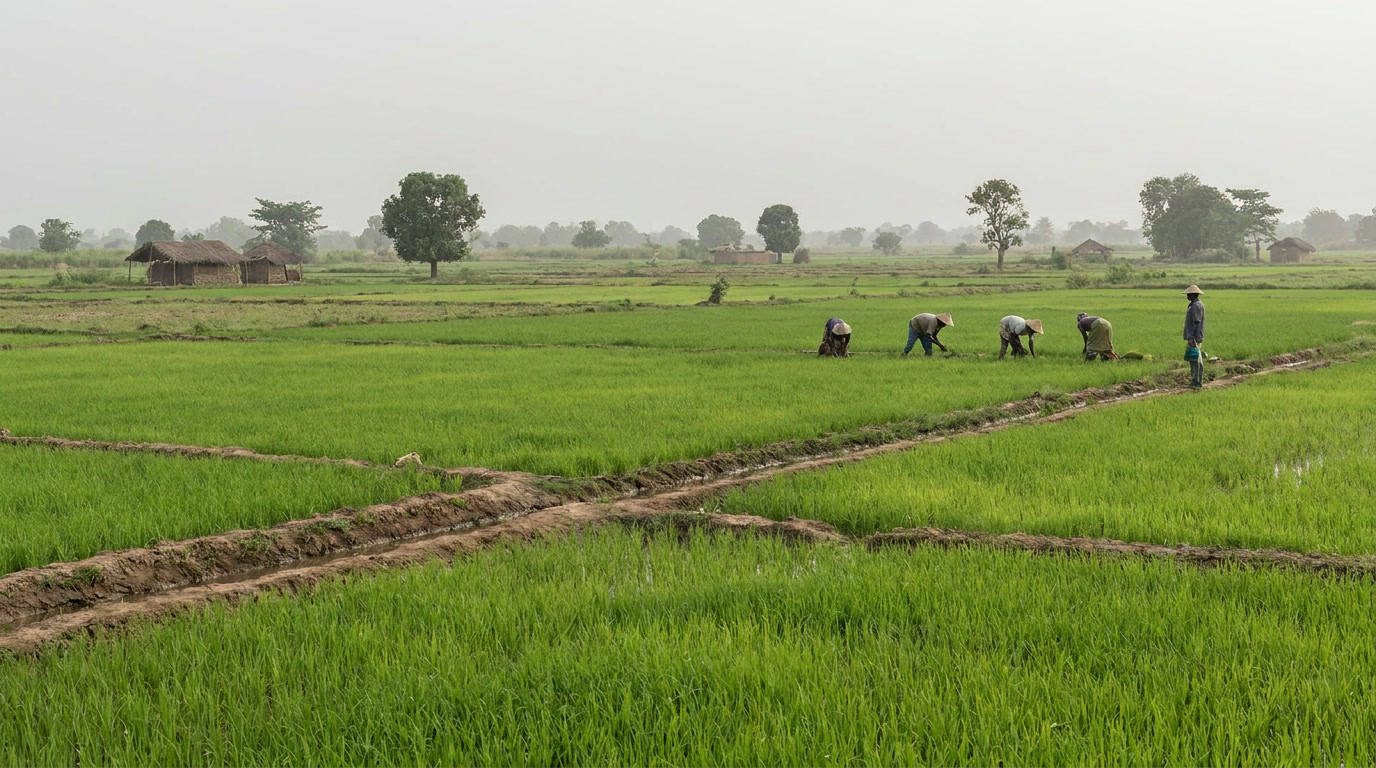
One of the clearest examples of how these investment priorities are being translated into country-level projects is Ghana's Regional West Africa Resilient Rice Value Chains Development Project, known as REWARD-Ghana.
On November 10, 2026, the Ghanaian government officially launched the five-year, US$18.8 million project, funded through an African Development Bank grant. The programme will run from 2026 to 2030 and focus on improving rice productivity, developing processing clusters, strengthening market connections, and supporting climate-resilient production systems (Ghana News Agency, 2026).
The project is expected to benefit approximately 20,000 smallholder farmers across selected districts in the Northern, North East, Savannah, and Upper West regions. Its activities include improving access to quality seeds, agricultural machinery, processing equipment, and markets.
The scale of Ghana's domestic rice market helps explain the investment.
According to the country's Ministry of Food and Agriculture, milled rice production increased from approximately 685,000 tonnes in 2022 to 960,000 tonnes in 2025. Despite this progress, domestic production currently meets only around 56% of national rice consumption, leaving the remaining 44% to be supplied through imports. Ghana's annual rice import expenditure has been estimated at between US$320 million and US$500 million (Ministry of Food and Agriculture, Ghana, 2026).
The government aims to achieve rice self-sufficiency by 2028, with a target of 3.31 million metric tonnes of paddy production.
For businesses, the project presents a practical example of where investment and commercial participation may be relevant. Machinery suppliers, seed producers, processing companies, storage providers, aggregators, and distributors are among the businesses needed to support the programme.
It also illustrates an important point that agricultural investment is more effective when production expansion is accompanied by reliable processing capacity and established buyers.
What Does This Mean for Africa?
West Africa's rice investment initiatives represent more than an effort to increase domestic food production. They create an opportunity to develop a broader agricultural business ecosystem involving farmers, processors, equipment manufacturers, logistics companies, financial institutions, and regional traders.
If implemented effectively, these investments could strengthen local processing capacity, improve the quality of domestically produced rice, create additional income opportunities for farmers, and support employment across agricultural and non-agricultural activities.
Regional cooperation will also be important. Rice production and consumption do not stop at national borders. Stronger trade connections, better market information, and more predictable policies can help countries respond to supply shortages and develop more competitive regional markets.
However, reducing import dependence will require more than increasing production targets. African rice businesses must be able to supply products that meet consumer expectations in terms of price, quality, and availability.
The challenge is therefore to build a rice industry that is not only more productive but also commercially competitive and capable of sustaining its operations.
The Nyle Perspective
At Nyle, we see West Africa's rice investment initiatives as an opportunity to connect international businesses with a sector undergoing significant development.
The potential extends beyond agricultural production to machinery, processing technology, seed systems, storage, logistics, and commercial distribution. For international companies, particularly those with experience in established Asian agricultural markets, the opportunity lies in identifying the right local partners and understanding where their expertise can address actual gaps in the value chain.
However, successful participation requires more than recognising a growing market. Investors need to assess individual project readiness, understand local operating conditions, identify reliable business partners, and establish whether there is a realistic commercial route to market.
West Africa's rice industry is creating opportunities for businesses that can contribute practical solutions across the supply chain. The next step is turning regional investment ambitions into projects that can operate, compete, and generate sustainable commercial value.
References
African Development Bank Group. (2026). Annual development effectiveness review 2026. https://www.afdb.org/sites/default/files/documents/publications/ader_2026_en_web.pdf
Davis, B., Mane, E., Gurbuzer, L. Y., Caivano, G., Piedrahita, N., Schneider, K., Azhar, N., Benali, M., Chaudhary, N., Rivera, R., Ambikapathi, R., Winters, P., Boero, V., & Laske, E. (2026). A new estimate for global and country-level employment in agrifood systems. World Development, 203, 107296. https://doi.org/10.1016/j.worlddev.2025.107296
Economic Community of West African States. (2026, June 5). Scaling up investments to drive West Africa's rice agenda. https://www.ecowas.int/scaling-up-investments-to-drive-west-africas-rice-agenda/
Food and Agriculture Organization of the United Nations. (2026). Global hunger statistics and trends. https://www.fao.org/hunger/en
Ghana News Agency. (2026, November 10). Government launches REWARD-Ghana to strengthen rice production. https://gna.org.gh/2026/11/government-launches-reward-ghana-to-strengthen-rice-production/
International Rice Research Institute. (2026a, October 14). Africa spends over $6bn a year on rice imports; IRRI says whole value chains must change. Agro News Today. https://agronewstoday.com/article/africa-rice-import-bill-value-chains-irri-addis-dialogue
International Rice Research Institute. (2026b). African and Asian leaders call for urgent investment, open trade, and regional cooperation. https://www.irri.org/news-and-events/news/african-and-asian-leaders-call-urgent-investment-open-trade-and-regional
Ministry of Food and Agriculture, Ghana. (2026, October 7). Ghana targets rice self-sufficiency by 2028 under US$18.8M REWARD Project. https://mofa.gov.gh/site/index.php/media-centre/latest-news/item/735-ghana-targets-rice-self-sufficiency-by-2028-under-us-18-8m-reward-project